
The Fire Hose of Tokens
For the past two years, the tech industry has been gripped by a single conviction: Generative AI is going to radically cut costs and make teams hyper-efficient. The logic was simple. Automate tasks → reduce headcount → save money. It seemed inevitable.
But in 2026, the bill has come due. And it is not a modest invoice; it’s a financial fire.
Microsoft has quietly begun clawing back access to the beloved AI coding tool, Claude Code, from thousands of its engineers. Across the floor of a sprawling tech campus in Seattle, the reasoning was brutally clear: finance said the math no longer worked.
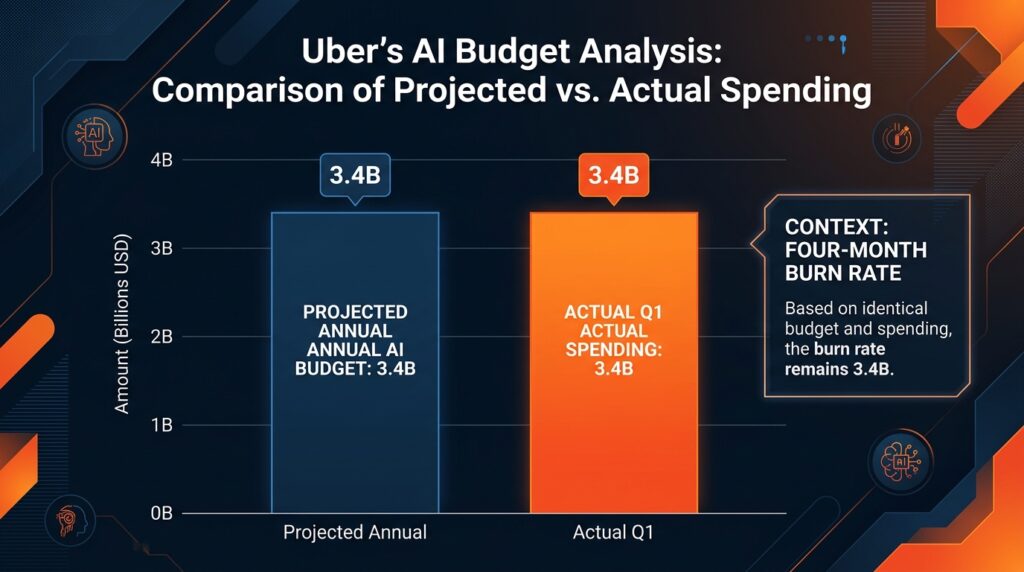
Just days earlier, Uber’s COO, Andrew Macdonald, publicly questioned whether the company’s massive AI investments were worthwhile, revealing that employees had blown through its entire $3.4 billion annual AI budget in the first four months of the year. And in a moment of startling candor, an Nvidia executive admitted that for many teams, the cost of AI compute is now “far beyond the cost of human employees.”
This article explains exactly why the AI cost crisis is happening now. You will learn about the flawed economics of token-based pricing, why your engineers’ favorite “vibe coding” tools are turning into budget black holes, and what this reckoning means for the future of work and AI innovation.
Microsoft’s Quiet Retreat – The High Cost of a Great Tool
To understand the AI cost crisis, we must examine the internal actions of the world’s largest software company. In late May 2026, Microsoft began a quiet but dramatic retreat: it started canceling direct Claude Code licenses for most employees in its Experiences and Devices division, which builds Windows, Microsoft 365, Outlook, Teams, and Surface. Engineers were given a deadline of June 30 to stop using the tool and were steered toward GitHub Copilot CLI.
This reversal is stark. Just six months earlier, Microsoft had opened up Claude Code to thousands of engineers, product managers, and designers, encouraging everyone to use “vibe coding” to reshape work. So, what changed?
The Financial Reality Sets In
The official reason was “toolchain consolidation,” but the subtext was all about cost. Microsoft had already spent billions investing in OpenAI and integrating Copilot across its stack. Paying a competitor for licenses used by its engineers was a line its CFO was unwilling to cross.
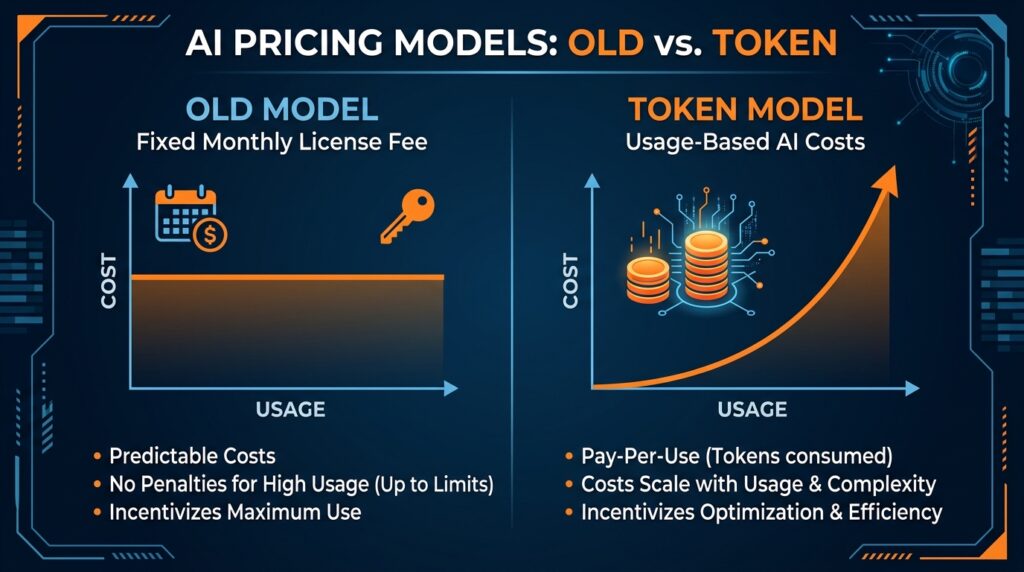
But more than that, the sheer volume of tokens being consumed was staggering. Agentic coding tools like Claude Code are not priced like traditional software licenses. They operate on a token-based model, where every suggestion, every line of generated code, and every debugging session incurs a variable cost. This was a fatal mismatch for a finance department accustomed to fixed, predictable monthly fees.
The “it’s just a license” line item had been replaced by a bottomless expense that grew in direct proportion to how much engineers loved the product.
Uber’s $3.4 Billion Wake-Up Call – The Productivity Trap
If Microsoft’s retreat was a quiet acknowledgment, Uber’s experience is a full-blown alarm for the entire industry.
In 2025, Uber’s research and development budget had already grown by 9%, reaching $3.4 billion. In 2026, the company projected a similar number, assuming a steady, predictable rise in AI-related costs. They were catastrophically wrong. By the end of April, just four months into the year, Uber’s CTO, Praveen Neppalli Naga, informed leadership that the company had already exhausted its entire 2026 AI coding tools budget.
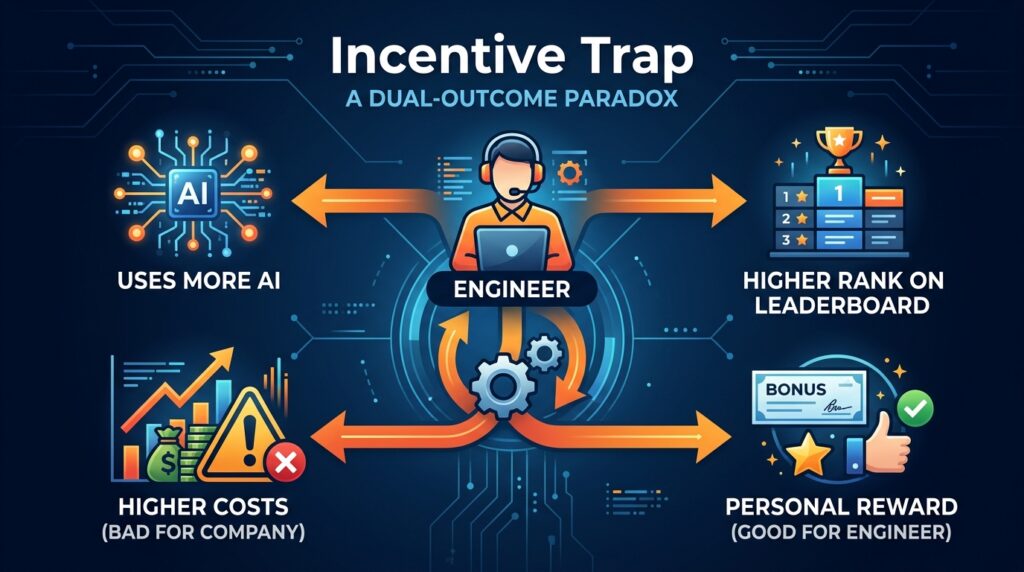
How did this happen? The culprit was a classic case of “what gets measured gets managed.” Uber had incentivized its engineers to adopt AI coding tools by creating internal leaderboards that ranked teams by total AI tool usage. This encouraged a frenzy of token burning, as teams competed to show they were the most “AI-driven.”
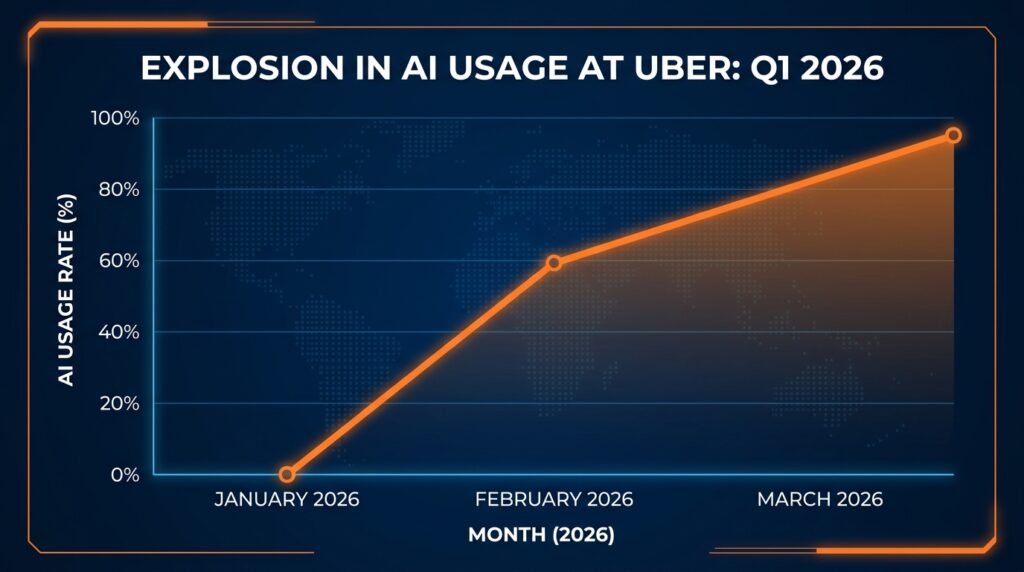
- 95% of Uber’s 5,000 engineers quickly adopted Claude Code.
- The average cost per engineer soared to an unsustainable 500–500–2,000 per month.
- By March, monthly AI usage rates among engineers had rocketed to 84–95%.
The company’s COO, Andrew Macdonald, publicly questioned the entire premise, asking whether the massive expenditure was actually making Uber’s product better for its customers or just creating a lot of “pointless” activity and “churn.”
Agents Don’t Punch Out
Unlike a human worker who works a set number of hours, an AI agent will happily run multiple simultaneous loops, 24 hours a day, 7 days a week. Engineers quickly discovered this, and instead of replacing some tasks, they added AI to their existing workflows. The result was not lower costs, but a massive increase in total throughput—and a massive increase in total spend.
The Shocking Reality – When AI Costs More Than a Human Colleague
Perhaps the most damning indictment of the current state of enterprise AI comes from an unlikely source: Nvidia, the company that sells the spades in this AI gold rush.
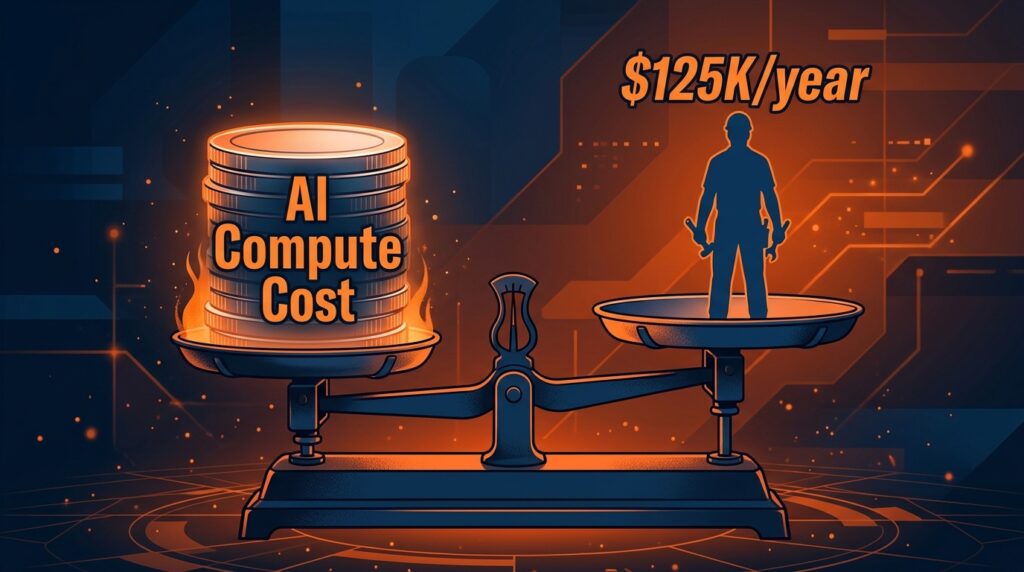
In a candid interview with Axios, Nvidia’s vice president of applied deep learning, Bryan Catanzaro, made a startling admission. He stated that within his own teams, the cost of AI compute is now “far beyond” the cost of the human employees they were supposed to be helping. In many cases, the AI tokens required to generate a single output had become more expensive than paying a skilled worker to do the same task.
This statement exposes the core flaw in the “AI-as-a-cost-cutter” narrative. For automation to save money, it must be cheaper than the labor it replaces. In 2026, for many complex, real-world tasks, it is not. Companies are discovering that the “productivity” gains come with a price tag that often matches or exceeds the salaries of the people they replaced.
The Root Cause – Why Token Economics Is Breaking the Model
The problem isn’t that AI is “too dumb”—it”‘s that the pricing model is wrong for the way it is being used.
The “More is More” Incentive
Traditional software costs are fixed. You buy a license, and you can use the software as much as you want. Token-based pricing is the opposite. It charges a small fee for every single operation. This model shifts all the cost variability onto the customer.
For engineers, this creates a perverse incentive: every “vibe coding” session, every experiment, and every parallel agent is a direct drain on the company’s finances. Uber’s own internal leaderboard, which ranked teams by AI usage, is a textbook example of how to create a budget disaster. The company unintentionally incentivized its engineers to maximize the very thing that was driving its costs through the roof.
The Productivity Illusion
The jump in coding speed from AI tools is undeniable. But the productivity gains are often decoupled from business value. An engineer can generate a prototype 100x faster, but if that prototype never makes it into production or solves a low-priority problem, the company has simply paid a lot of money to generate a lot of what’s known as “toy software.”
As the tech commentator Ed Zitron has warned, the entire AI subscription boom has been built on a “subsidy for growth” illusion, where companies priced their products below cost to capture market share. The shift to pay-as-you-go token billing is shattering that illusion, revealing the true, staggering cost of running these systems at scale.
The Looming Correction – What Comes Next
The AI cost reckoning is just beginning. The open question for every CEO and CFO is no longer “Can we afford to invest in AI?” but “Can we afford not to control our AI spending?”
The Shift to “Outcome-Based” Models
The backlash against unpredictable token costs is already forcing a change. The market is shifting toward “outcome-based” pricing, where vendors are paid for the value they deliver rather than the raw compute they consume. This re-centers the focus on the business problem, not the number of tokens burned in a “vibe coding” sprint.
A Market Correction and a Return to Fundamentals
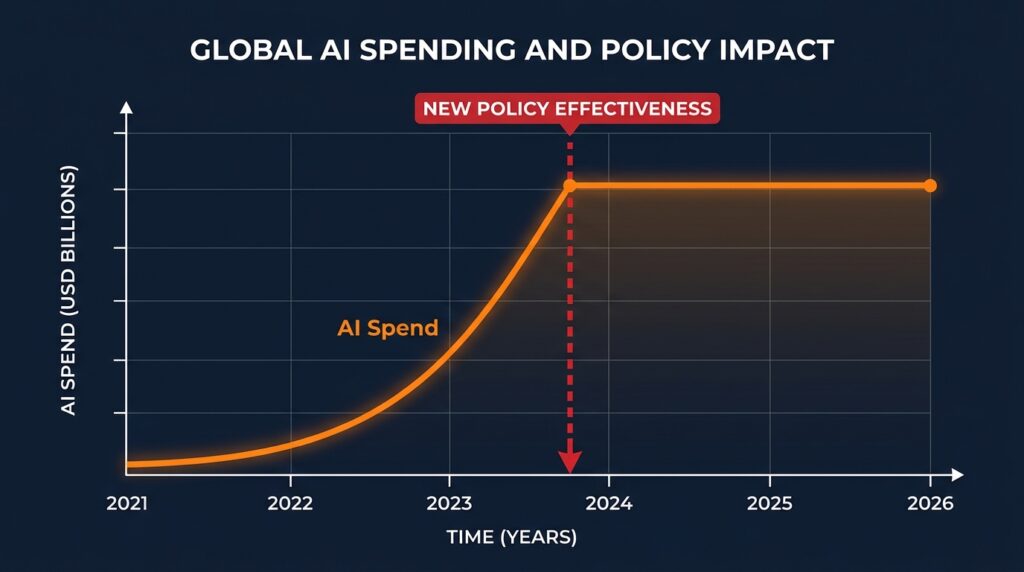
In the near term, expect a wave of canceled licenses, budget freezes, and more aggressive financial oversight of AI procurement. The era of “free money” for AI startups is over. In the long term, this correction is healthy. It will force vendors to build more efficient models and enterprises to be more disciplined about where they deploy AI.
AI is not going away. But the fantasy that it is a magic, cost-free lever for infinite productivity is now dead.
Frequently Asked Questions (FAQ)
Q1: Is AI really more expensive than human workers?
A: For complex tasks that require a lot of compute, yes. Nvidia’s own VP admitted that for his teams, the cost of AI compute now far exceeds the cost of the human employees it was meant to augment. The token-based pricing model is a major reason for this.
Q2: Why did Uber run out of money so fast?
A: Uber created an internal leaderboard that ranked engineering teams by their total AI usage. This incentivized a massive increase in token consumption, which drove costs up to 2,000 per engineer per month. They burned through their entire 2,000 per engineer per month. They burned through their entire 3.4 billion budget in just four months.
Q3: What is a “token-based” pricing model, and why is it a problem?
A: Instead of a fixed monthly fee, token-based pricing charges a small amount for every single AI operation (like every code suggestion or API call). This shifts all the cost risk to the customer and can lead to unpredictable, exploding bills, especially when employees are incentivized to use the tools as much as possible.
Q4: What is “vibe coding”?
A: “Vibe coding” is a term for using AI tools to generate code based on natural language descriptions. It’s been celebrated for its speed, but this analysis shows the practice can lead to enormous, unsustainable token consumption.
Q5: What are companies doing to control AI costs?
A: Some are switching to fixed-cost, outcome-based models where vendors are paid for results, not for token usage. Many are also instituting stricter financial oversight and usage caps and re-evaluating which tasks truly need a powerful, expensive AI agent versus a simpler, cheaper automation tool.
Q6: Does this mean the AI boom is over?
A: No. It means the “free lunch” is over. The industry is entering a phase of “rationalization.” Companies will be more selective about where they deploy AI, focusing on high-value tasks with a clear ROI, rather than funding a free-for-all.
Q7: How does this connect to your article on “Vibe Coding”?
A: This is the financial aftermath. Our previous article talked about the cultural shift toward “vibe coding.” This story is the bill for that shift, showing the real-world cost of those engineering practices.
Q8: Is Microsoft abandoning AI?
A: Not at all. Microsoft is merely canceling licenses for a competitor’s AI tool (Claude Code) to save money and consolidate its own developer stack around its internal GitHub Copilot product. It’s a strategic, financial decision, not a retreat from AI.
Q9: What’s the most important takeaway for a CFO?
A: Do not incentivize unconstrained AI usage. Variable costs can spiral out of control faster than any other line item. Implement strict budget controls, monitor usage patterns, and tie AI investments to clear, measurable business outcomes.
Q10: What happens if this trend continues?
A: We could see a wave of tech companies revising their earnings forecasts downward. Widespread and unmanaged AI costs could squeeze profit margins and lead to a sector-wide correction, as the market re-evaluates the profitability of companies that have over-invested in unproven AI systems.
Conclusion – The Era of the Unpaid Intern Is Over
The recent events at Microsoft and Uber mark a pivotal moment. The era of seeing AI as an infinitely scalable, unpaid intern that you can just give vague tasks to is officially over. That phase was subsidized by venture capital and the pursuit of market share.
In 2026, the bill has come due. Finance departments are asking the hard questions, and the answers are not always reassuring. The AI industry has a core economic problem to solve, and every company using these tools must now confront the same reality: The AI free lunch is over. The agents are now on the clock, and their time is expensive.

References & Further Reading
- Yahoo Finance – “Why Your Engineers’ Favorite AI Tools Are Wrecking Your 2026 Budget” (May 26, 2026)
- CNBC TV18 – “Tech giants confront soaring AI costs as Microsoft, Uber and Meta reassess spending and returns” (May 26, 2026)
- The Verge – “Uber president says AI spending is getting ‘harder to justify’” (May 26, 2026)
- PunchNG – “AI costs exceeding firms’ employee salaries, say Uber, Nvidia” (May 8, 2026)
- 36氪 – “微软按下 vibe coding 暂停键:烧 token 已经比员工贵了” (May 26, 2026)
- The Economic Times – “Replacing humans with AI is turning out to be costlier than expected, Uber, Nvidia execs say” (May 8, 2026)
- Livemint – “AI promised cost savings, but Microsoft and Uber say it’s costing more than human workers” (May 25, 2026)






Leave a Reply