
The Smartphone King’s New Battlefield
For three decades, Qualcomm has been synonymous with one thing: the chips inside your smartphone. Its Snapdragon processors power billions of Android devices worldwide. The company was the undisputed king of mobile.
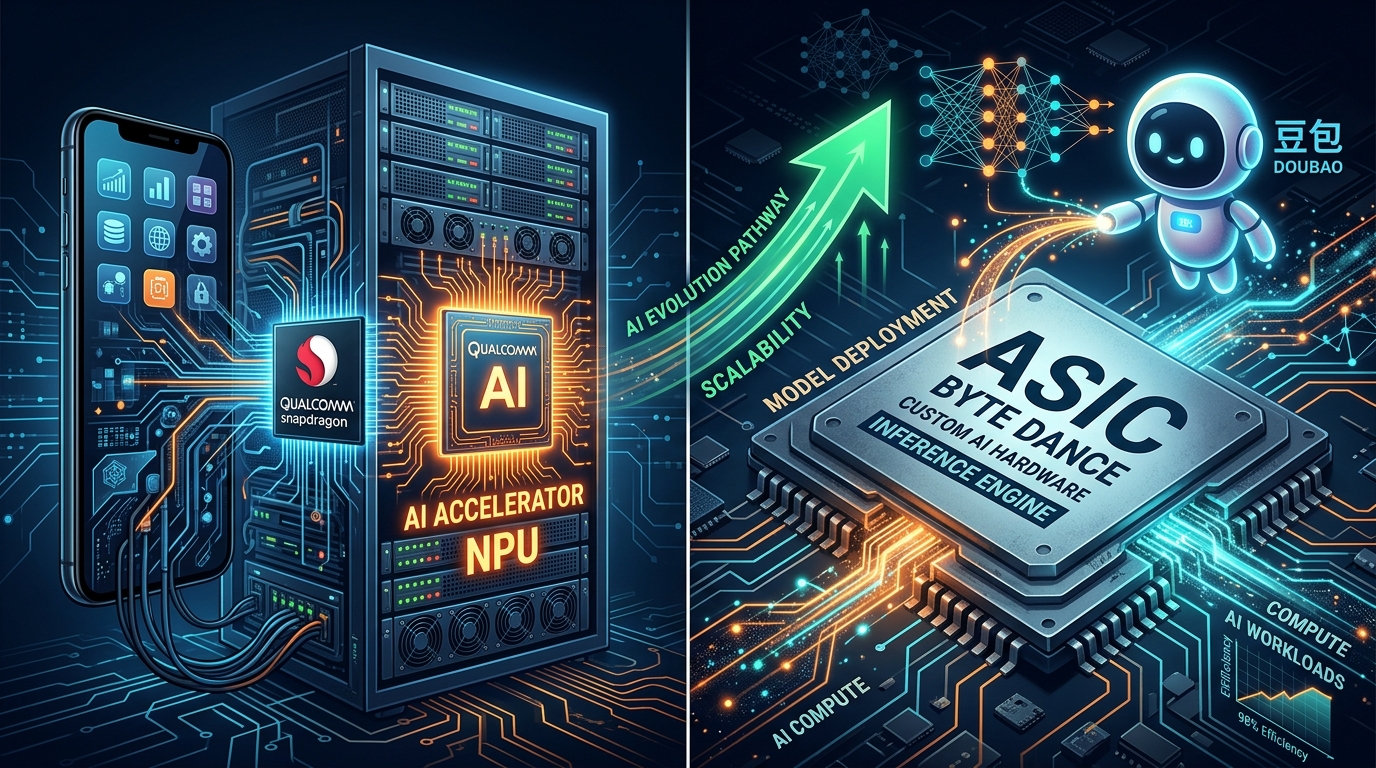
That era is ending. On May 26, 2026, Bloomberg News reported that Qualcomm had struck a deal to supply millions of custom AI chips to ByteDance, the Chinese parent company of TikTok. The chips are application‑specific integrated circuits (ASICs)—purpose‑built processors designed to run AI agent software at massive scale.
By the time the news broke, Qualcomm shares had jumped as much as 8.3% to a new intraday record, closing up nearly 5%.
This is not just another supply contract. It is a signal that a fundamental shift is underway in the AI chip industry—one that favors efficient, inference‑optimized silicon over the brute‑force GPUs that made Nvidia a $5 trillion company. And Qualcomm, of all companies, is quietly positioning itself at the center of that transition.
This article explains why the smartphone king is now building chips for AI agents, how the ByteDance deal fits into a broader strategic pivot, and why this shift marks the beginning of a new phase in the AI hardware race.
The Deal – What Qualcomm Is Actually Building for ByteDance
Millions of Custom ASICs
According to Bloomberg’s reporting, ByteDance is set to purchase millions of Qualcomm’s AI‑focused ASICs to support its AI agent software. The Chinese tech giant is poised to become one of the first major customers for Qualcomm’s custom AI chips — a key win for a company trying to expand from smartphone processors into AI infrastructure.
Turning Design into Silicon
The deal is not simply an off‑the‑shelf purchase. It will help ByteDance turn an already completed in-house chip design into a semiconductor ready for mass production. ByteDance designed the chip architecture internally; Qualcomm is providing the expertise to turn that blueprint into millions of physical units.
This is a sophisticated arrangement. ByteDance retains control over the design—ensuring the chip is tailored precisely to its Doubao AI ecosystem— while Qualcomm handles the heavy engineering of manufacturing readiness.
The Numbers Behind the Deal
ByteDance has been spending aggressively on AI infrastructure. The company raised its AI infrastructure budget by 25% to 200 billion yuan ($29.4 billion). Its Doubao AI chatbot was China’s most downloaded AI application for most of last year. The deal is not speculative; it is driven by surging demand that ByteDance already has.
The Strategic Pivot – Why Qualcomm Is Finally Returning to the Data Center
The ByteDance deal is not an accident. It is the culmination of a carefully planned strategic shift that began in 2025—one that represents a remarkable reversal of fortune for a company that once abandoned the data center market entirely.
The 2018 Retreat
In 2017, Qualcomm launched its Centriq server processors — ARM‑based chips positioned as power‑efficient alternatives to Intel’s data center dominance. By 2018, the entire effort was shuttered. The company retreated back to its mobile stronghold, ceding the data center market to Intel, AMD, and later Nvidia.
The 2025 Comeback
Seven years later, Qualcomm is returning — but not to compete where Nvidia is strongest. As CFO and COO Akash Palkhiwala recently explained, the company has prepared three distinct product lines for the data center market:
- A new CPU for agentic AI workloads — designed specifically for the logic and orchestration tasks required by autonomous agents.
- AI accelerators — the AI200 (shipping 2026) and AI250 (2027), aimed at inference rather than training, with lower power consumption than GPU‑heavy alternatives.
- Custom ASICs—purpose‑built chips for hyperscale customers like ByteDance, exactly the product line now bearing fruit.
This is not a head‑on assault on Nvidia’s fortress. It is a flanking maneuver.
The Inference Opportunity
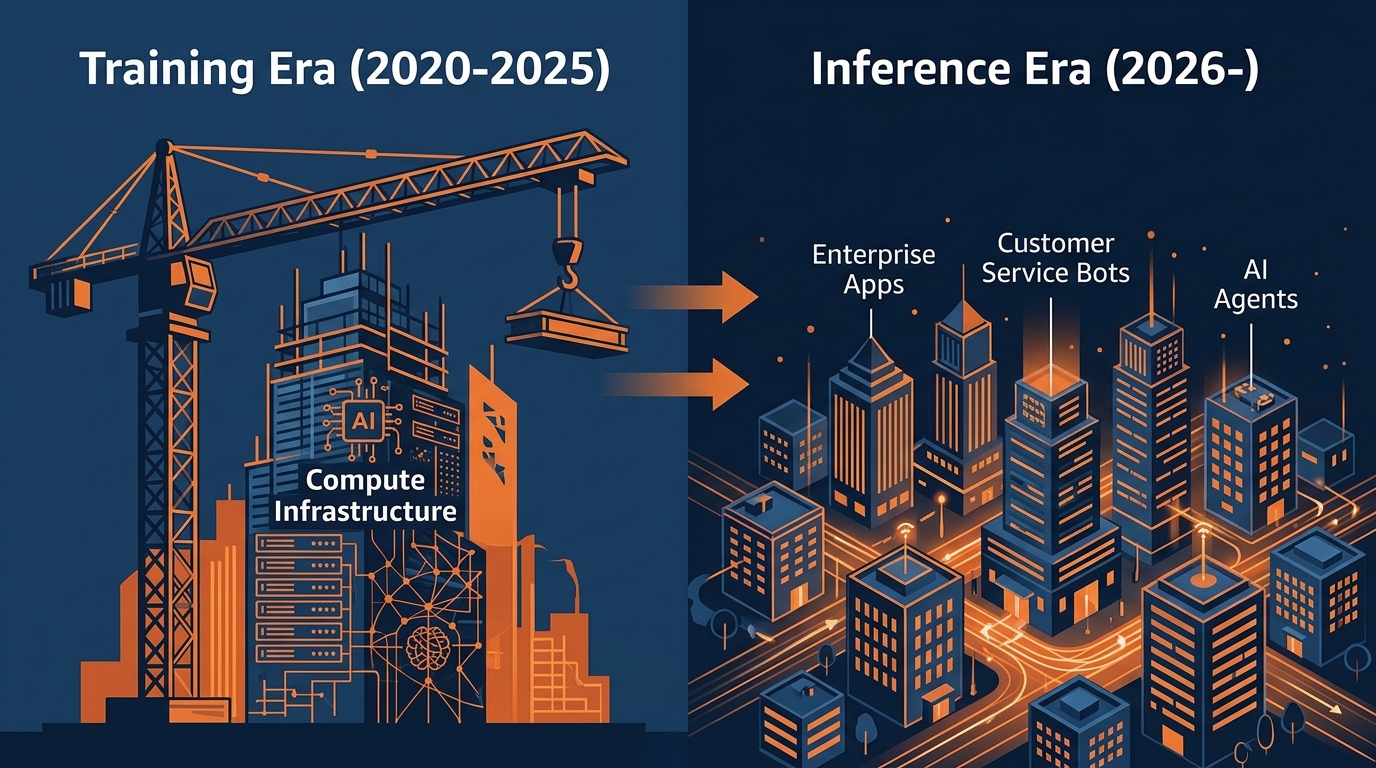
While Nvidia dominates training—the process of building AI models—a new market is emerging. Inference—the ongoing task of running those models for millions of users—is growing even faster. Analysts project that by 2026, roughly two‑thirds of AI compute will be for inference, not training.
Qualcomm’s new chips are inference‑optimized, offering higher efficiency and lower total cost of ownership for large‑scale deployment. As Palkhiwala put it, rather than having the same solution for varied workloads, one can build solutions for specific workloads and optimize them based on needs.
The Agentic Catalyst – Why ByteDance Needs Custom Silicon
The ByteDance deal did not happen in a vacuum. It was driven by a specific technological shift that is reshaping the entire AI industry: the rise of AI agents.
What Are AI Agents?
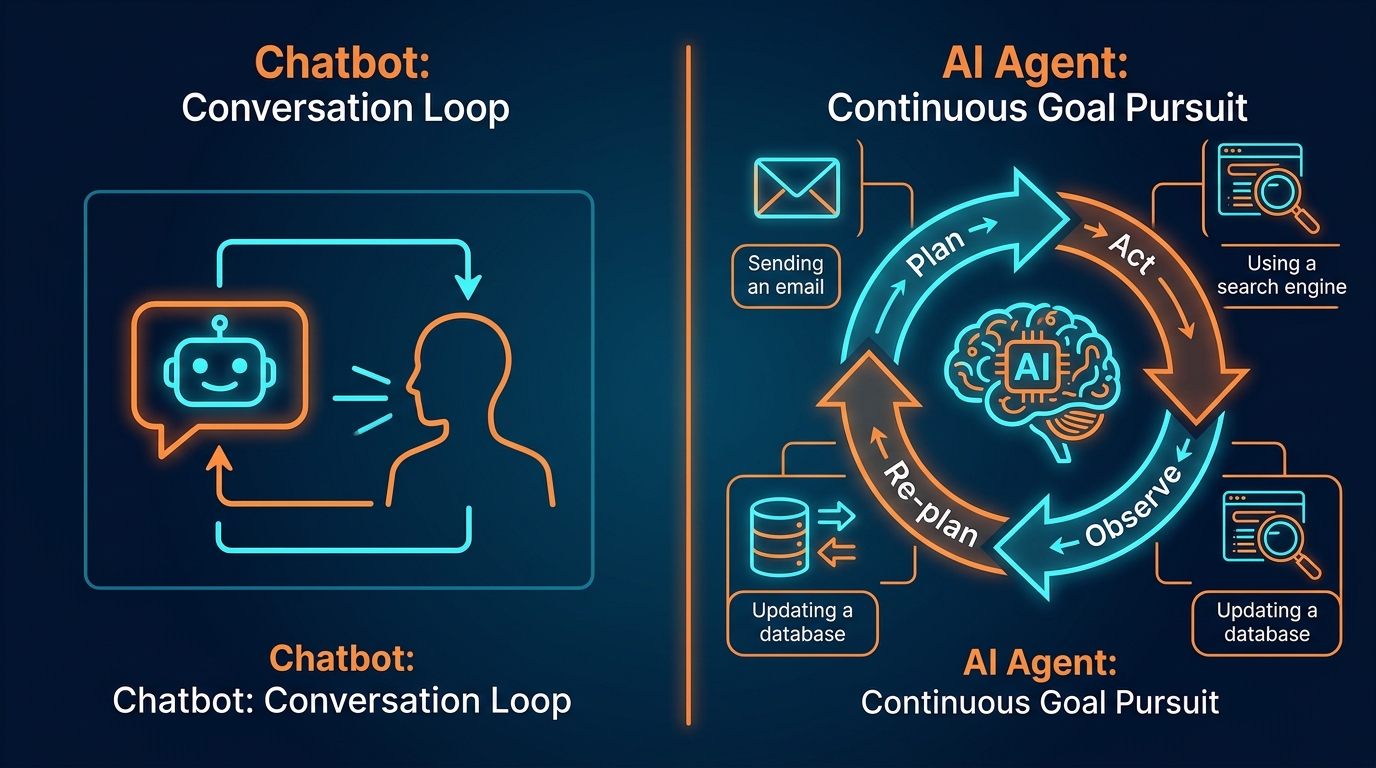
Unlike traditional chatbots that respond to a single prompt, AI agents can plan, act, and adapt across multiple steps without constant human supervision. They can call tools, search the web, run code, and coordinate with other agents—and they do all of this in real time, at scale.
For ByteDance, whose Doubao ecosystem includes AI chatbots, recommendation engines, and increasingly autonomous features, the infrastructure demands are staggering. AI agents run continuously. Each interaction requires inference—the expensive, ongoing task of processing user queries and generating responses.
The Inference Explosion
As AI agents become more common, inference costs are rising exponentially. Custom ASICs can reduce those costs dramatically — by eliminating unnecessary features, optimizing for specific model architectures, and reducing power consumption. For a company processing billions of agent queries, the savings are measured in hundreds of millions of dollars.
The Strategic Rationale
By designing its own chip architecture and using Qualcomm to manufacture it, ByteDance gains:
- Cost control — no paying Nvidia’s premium margins for every inference query.
- Performance tuning — the chip is built specifically for Doubao’s models, not generic AI workloads.
- Supply chain security — less dependence on Western suppliers amid US‑China tensions.
The Geopolitical Tightrope – How the Deal Avoids US Sanctions
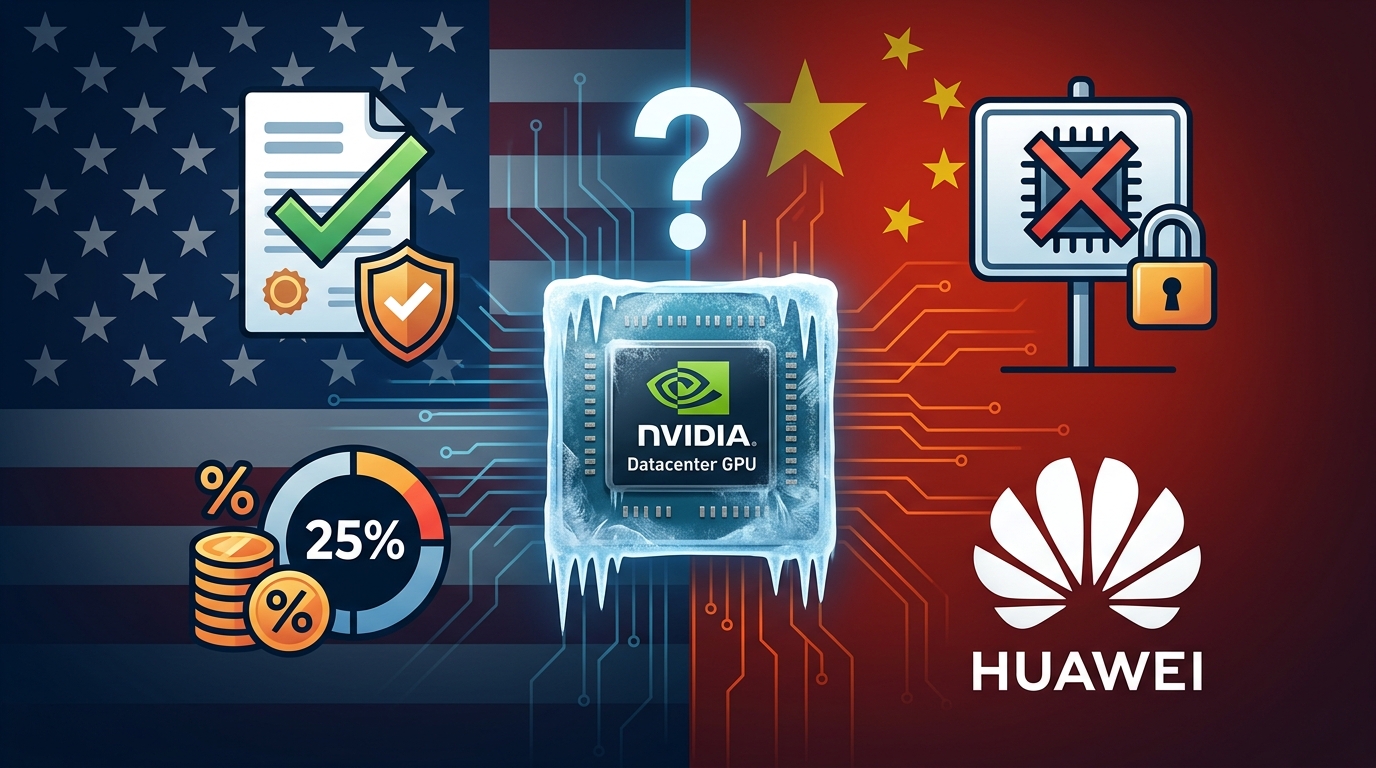
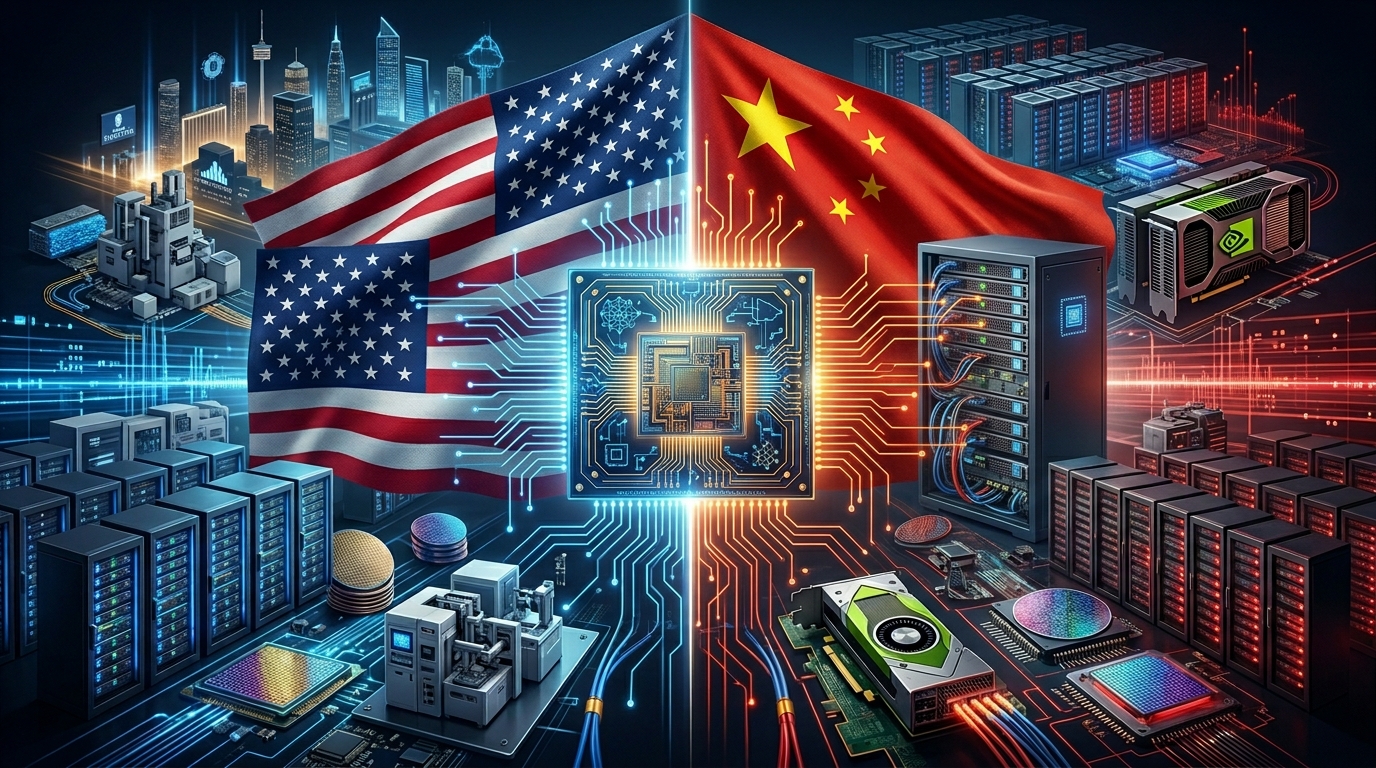
The ByteDance deal carries obvious geopolitical risk. The US has imposed sweeping export controls on advanced semiconductors shipped to Chinese firms, and ByteDance is explicitly named in those restrictions.
Staying Within Legal Thresholds
The arrangement reportedly stays within legally acceptable computing thresholds. That means the chips Qualcomm is supplying to ByteDance fall below the performance ceiling that would trigger US export restrictions. This is a careful balancing act: the chips must be powerful enough to run ByteDance’s AI agents efficiently, but not so powerful that they violate US law.
The Bigger Pattern
The deal fits into a broader pattern of US‑China AI collaboration that circumvents the most restrictive sanctions. Chinese companies design the architecture; US companies manufacture the chips. The US retains control over the most advanced manufacturing nodes, while Chinese firms gain access to cutting‑edge silicon.
The Export Control Trade‑Off
For the US, allowing such deals is a calculated trade‑off. It preserves some US revenue and manufacturing jobs while still denying China access to the absolute frontier of chip performance. But it also helps China build its AI infrastructure — potentially accelerating its progress in the long run.
The Competitive Landscape – Qualcomm Joins a Crowded Field
Qualcomm is not entering an empty market. It is joining a field of formidable competitors, each with their own inference‑focused silicon.
| Company | Product | Strengths | Weaknesses |
|---|---|---|---|
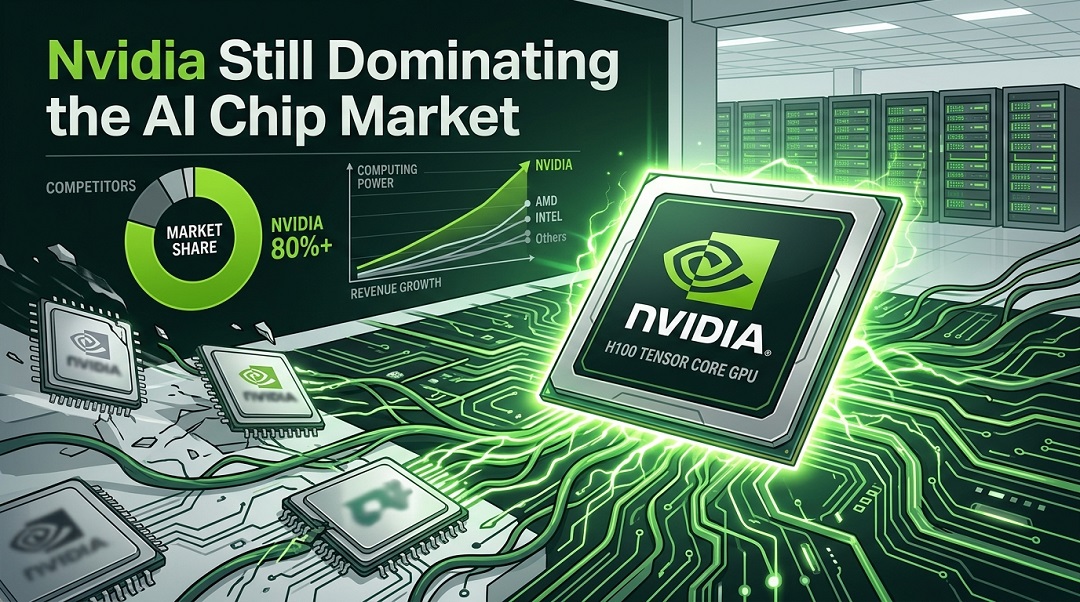
| Nvidia | GPUs (H100, B200, Rubin) | Dominant ecosystem, CUDA moat, highest performance | High power consumption, expensive, overkill for many inference tasks |
| AMD | MI series accelerators | Strong performance, competitive pricing | Smaller ecosystem than Nvidia, later to market with inference focus |
| Broadcom | Custom ASICs | Leading custom design services, strong hyperscale relationships | Less visible consumer brand, dependent on customer designs |
| Marvell | Custom ASICs | Strong data center presence, established customer base | Similar to Broadcom, less differentiation |
| Amazon | Trainium / Inferentia | Integrated with AWS, massive scale, deep customer lock‑in | Only available within AWS ecosystem |
| TPU | Integrated with Google Cloud, optimized for Gemini models | Only available within Google ecosystem | |
| Qualcomm (new) | ASICs + AI200/AI250 | Power efficiency, mobile heritage, new entrant energy | Unproven in data center, needs to build customer trust |
The market has room. Palkhiwala himself noted that “the data centre market is so big that there is room for multiple players”.
But Qualcomm has ground to make up. Nvidia’s CUDA software ecosystem remains the industry standard, and companies that have built their AI pipelines around Nvidia are reluctant to switch — even for cost savings. Qualcomm’s pitch will need to be more than just lower power consumption; it will need to demonstrate seamless integration, developer tools, and reliability at scale.
What This Means for the Future of AI Hardware
The Qualcomm‑ByteDance deal is not an isolated event. It is a signpost pointing toward a larger shift in the AI industry.
The Fragmentation of the AI Chip Market
Until recently, AI chips meant Nvidia GPUs. That is no longer true. The market is fragmenting into specialized niches:
- Training: Still dominated by Nvidia, but challenged by custom TPUs and in‑house designs from hyperscalers.
- Inference: A growing battlefield where efficiency, power consumption, and cost matter more than raw throughput. This is where Qualcomm, Broadcom, Marvell, and the custom ASIC arms of hyperscalers will compete.
- Agentic computing: A new category emerging around chips designed for the logic and orchestration tasks required by autonomous agents. Qualcomm’s new CPU for agentic AI targets this niche directly.
The End of the “One Chip Fits All” Era
The diversity of AI workloads is creating demand for diverse hardware. Training a foundation model requires different trade‑offs than running a billion chatbot queries. Running an autonomous agent requires different trade‑offs than powering a recommendation engine. The era of the general‑purpose GPU as the default answer for everything AI is ending.
Qualcomm’s Second Chance
For Qualcomm, the ByteDance deal is a second chance — an opportunity to succeed in the data center market after its 2018 retreat. But success is not guaranteed. The company needs to deliver reliable products, build developer mindshare, and navigate the treacherous geopolitical waters of US‑China technology competition.
Still, the market responded enthusiastically. An 8% intraday stock jump reflects genuine investor belief that Qualcomm has found a credible path into AI infrastructure. The question now is whether it can execute.
Frequently Asked Questions (FAQ)
Q1: What exactly is Qualcomm building for ByteDance?
A: Qualcomm is manufacturing millions of custom ASICs (application‑specific integrated circuits) designed by ByteDance. These chips are optimized for running AI agent software at scale, not for general‑purpose computing.
Q2: Why did ByteDance choose Qualcomm instead of Nvidia?
A: Nvidia’s GPUs are optimized for training, not inference. ByteDance needs efficient, low-cost chips for running AI agents continuously—a workload where custom ASICs have a significant advantage. Qualcomm’s manufacturing expertise and power‑efficient design heritage make it a natural partner.
Q3: Is this deal legal under US export controls?
A: The chips reportedly fall within legally acceptable computing thresholds under existing US restrictions on advanced semiconductor exports to China. This allows the deal to proceed while still complying with US law.
Q4: How does this affect Nvidia’s market position?
A: In the short term, not much. NVIDIA remains dominant in training and high‑end inference. But the deal signals that the inference market is fragmenting, and Nvidia may not have a lock on it. Over time, companies like Qualcomm could capture significant share in inference‑optimized silicon.
Q5: Will other Chinese companies follow ByteDance’s lead?
A: Likely yes. Alibaba, Tencent, and Baidu are all investing heavily in domestic AI chip development. The ByteDance‑Qualcomm model—Chinese design, US manufacturing—could become a template for navigating export controls.
Q6: Is Qualcomm abandoning smartphones?
A: No. Smartphone chips remain Qualcomm’s core business. But the company is diversifying into AI infrastructure to reduce its dependence on a maturing smartphone market.
Q7: How does this connect to your earlier articles on HBM and Nvidia?
A: Directly. The shift from training to inference is a recurring theme across our coverage. Custom ASICs are the hardware manifestation of that shift. While Nvidia dominates training, inference is an open battlefield — and Qualcomm just made a major move.
Q8: When will the chips start shipping?
A: Qualcomm has indicated that custom ASIC shipments for its hyperscale customer will begin in the second half of 2026, with December a likely target.
Q9: What is an AI agent?
A: An autonomous AI system that can plan, act, and adapt across multiple steps without constant human supervision. Unlike a chatbot that answers a single question, an agent can complete complex tasks—researching a topic, drafting an email, updating a database—in sequence.
Q10: Will consumers notice any difference from this deal?
A: Indirectly, yes. The chips will power ByteDance’s Doubao AI agents, which millions of users interact with daily. If successful, the deal could lead to faster, cheaper, and more capable AI assistants — on ByteDance’s platform and, eventually, others.
Conclusion – The Smartphone King’s Second Act
The Qualcomm‑ByteDance deal is not just a supply contract. It is a declaration that the AI chip market is entering a new phase — one where inference matters as much as training, where efficiency matters as much as brute force, and where custom silicon for specific workloads will challenge the era of the general‑purpose GPU.
For Qualcomm, it is a second chance. In 2018, the company retreated from the data center market, unable to compete. Today, it is returning not to fight Nvidia on Nvidia’s ground, but to build a new battlefield.
The smartphone king is no longer just a smartphone king. And the age of the AI agent has found its newest chip supplier.
References & Further Reading
- Bloomberg News – “Qualcomm Strikes AI Chip Deal With TikTok Owner ByteDance” (May 26, 2026)
- Reuters – “Qualcomm strikes AI chip deal with TikTok owner ByteDance” (May 26, 2026)
- Yahoo Finance – “Qualcomm Jumps 8.3% After ByteDance AI Chip Deal Report” (May 26, 2026)
- EE Times – “Qualcomm Data Center Business Breakthrough” (April 2026)
- KuCoin News – “Qualcomm Signs Hyperscale Customer for Custom Data Center Chips” (May 17, 2026)
- Economic Times – “Qualcomm Throws Down the Gauntlet to Nvidia on Chips” (May 9, 2026)
- GuruFocus – “Qualcomm Jumps 8.3% After ByteDance AI Chip Deal Report” (May 26, 2026)
- TrendForce – “Agentic AI and Real‑time Inference: Trends to Watch 2026” (January 2026)






Leave a Reply