
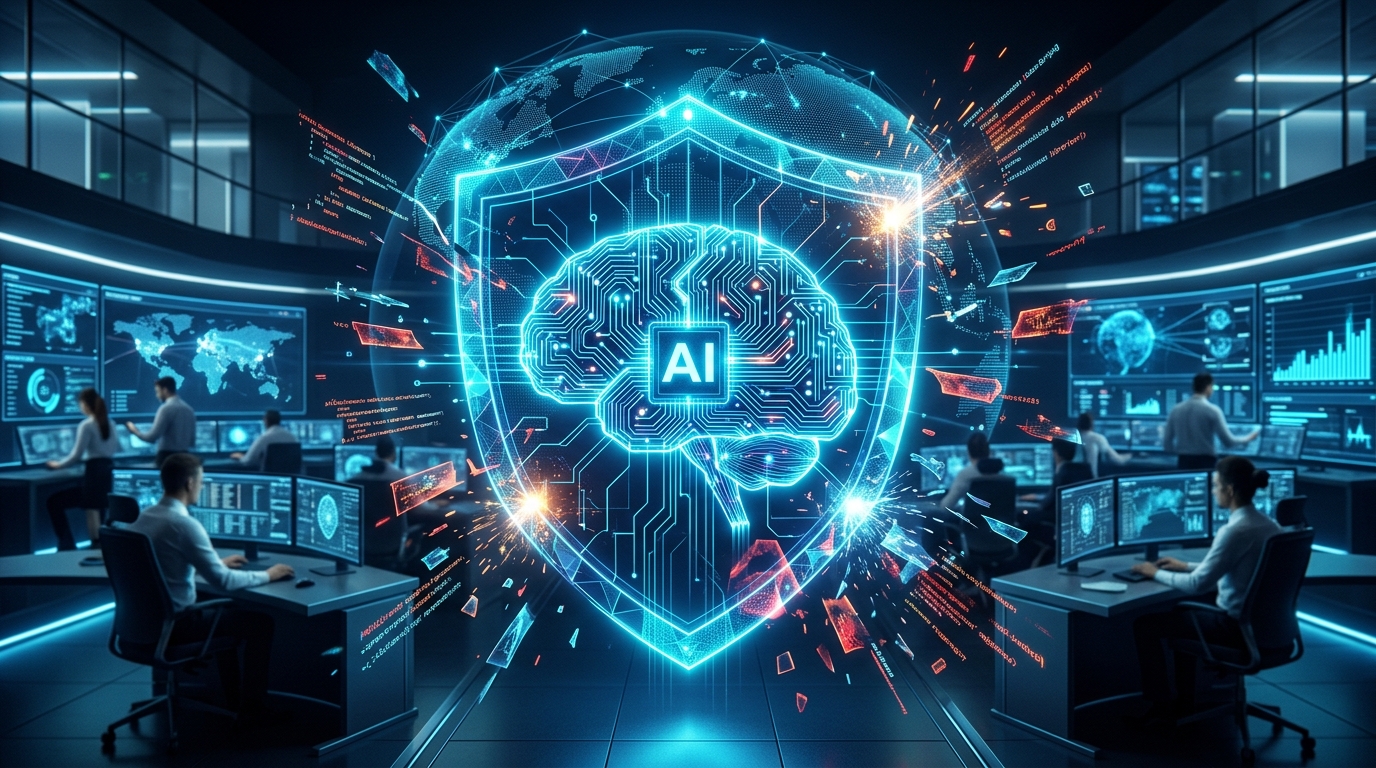
Artificial intelligence is rapidly becoming the backbone of the global digital economy. From search engines and customer support systems to financial forecasting and autonomous systems, AI now powers critical infrastructure across industries.
But as AI systems grow more powerful, a new reality is emerging: the future of AI security is not just about protecting models—it is about protecting everything around them.
The recent security issue involving OpenAI and a compromised open-source library highlights a critical shift in cybersecurity thinking. Even though no user data was breached, the incident exposed a deeper truth: AI security is now inseparable from software supply chains, developer ecosystems, and third-party dependencies.
This article explores what this incident reveals about the future of AI security, why traditional cybersecurity models are no longer enough, and how companies and users can prepare for the next generation of threats.
OpenAI’s Security Issue Explained: What Actually Happened?
The foundation of understanding the future of AI security begins with the incident itself.
OpenAI confirmed that it experienced a security issue tied to a compromised open-source dependency in the JavaScript ecosystem (specifically an npm package ecosystem used in development workflows).
Key facts of the incident:
- No user chats, prompts, or sensitive user data were accessed.
- Two employee devices were affected in a corporate environment.
- Limited credential material from internal repositories may have been exposed.
- The issue originated from a compromised open-source library (TanStack ecosystem).
- OpenAI responded by rotating credentials and strengthening internal controls.
According to Reuters reporting and OpenAI’s own disclosure, the incident was contained before it reached production systems or end users.
However, even though the impact was limited, the implications are significant.
In modern AI systems, the entire software ecosystem serves as the attack surface, not just the application.
Why “No User Data Breached” Still Matters More Than You Think
At first glance, this incident may seem minor: no customer data was leaked, no systems were fully compromised, and no models were altered.
So why does it matter?
Because in cybersecurity, near-misses are often more important than breaches.
1. Early-stage compromise still signals systemic risk
Even limited exposure to credentials or development environments can lead to the following:
- future unauthorized access attempts
- lateral movement inside systems
- long-term persistence risks
- exploitation in delayed attacks
2. Trust in AI systems depends on invisible infrastructure
Users don’t see:
- dependency chains
- build systems
- developer pipelines
- package registries
But attackers do.
3. “No breach” is not the same as “no vulnerability.”
Modern cybersecurity frameworks increasingly emphasize the following:
- detection speed
- containment effectiveness
- transparency
- resilience
In this case, the key success factor was rapid response—not the absence of risk.
How Software Supply-Chain Attacks Are Changing AI Security
One of the most important lessons from this incident is that AI companies are now heavily exposed to software supply-chain attacks.
A supply-chain attack occurs when attackers compromise trusted software components—such as libraries, frameworks, or developer tools—rather than attacking the final system directly.
Why this is so dangerous
- Developers trust open-source packages by default.
- Dependencies are often installed automatically.
- One compromised library can affect thousands of systems.
- Attacks are difficult to detect at runtime.
- Exploits often spread silently through updates.
Example pattern (simplified):
- Attacker compromises open-source package
- A package update is pushed to the registry
- Developers unknowingly install malicious versions
- Malicious code runs in the build or production environment
- Credentials or internal data is exfiltrated
This is exactly why supply-chain security is now considered one of the most serious threats in modern cybersecurity.
Why Open-Source Dependencies Are Now a Strategic Risk
The modern AI ecosystem depends heavily on open-source software.
While open-source development enables innovation, it also introduces structural risks.
Key vulnerabilities include the following:
1. Dependency explosion
Modern applications may include:
- hundreds or thousands of packages
- nested dependencies
- indirect libraries with unknown maintainers
2. Maintainer risk
If a single maintainer account is compromised, attackers can:
- publish malicious updates
- inject backdoors
- exploit trust relationships
3. Typosquatting attacks
Attackers upload packages with names similar to popular libraries.
4. Silent updates
Even legitimate packages can introduce malicious changes in updates.
Why AI companies are especially vulnerable
AI companies like OpenAI operate.
- massive distributed systems
- frequent deployments
- large developer teams
- complex cloud infrastructure
Each of these increases the attack surface significantly.
Code-Signing and Trust Infrastructure: The Invisible Security Layer
One of the most overlooked aspects of the incident is the importance of code-signing certificates and software trust systems.
When OpenAI rotated its code-signing certificates, it was addressing a critical risk:
If attackers gain access to signing credentials, they could potentially distribute malicious software that appears legitimate.
Why code-signing matters
Code-signing ensures the following:
- software integrity
- authenticity of updates
- user trust in applications
Without it, attackers could impersonate official software updates.
Why OpenAI forced macOS updates
OpenAI required users to update desktop applications to ensure the following:
- Old, potentially exposed certificates are no longer trusted.
- New secure signing keys are used.
- Compromised credentials cannot be reused.
This highlights a key insight:
AI security is no longer just server-side—it extends into user devices and software distribution systems.
What Businesses Can Learn From This AI Security Incident
This incident is not just relevant to AI companies—it is a blueprint for every modern software organization.
1. Dependency management is now a security priority
Companies must:
- audit open-source libraries regularly
- lock dependency versions
- monitor package integrity
2. Supply-chain security must be continuous
Security is no longer a one-time audit—it requires
- real-time monitoring
- automated alerts
- behavior-based detection
3. Developer environments are high-value targets
Attackers increasingly target:
- CI/CD pipelines
- developer laptops
- package registries
- internal repositories
4. Incident response speed matters more than prevention alone
Even strong defenses can fail.
What matters most is the following:
- how fast you detect
- how quickly you contain
- how transparently you respond
The Future of AI Security: A Shift From Models to Infrastructure
The biggest misconception about AI security is that it is primarily about the AI model itself.
In reality, the future of AI security is shifting toward infrastructure protection.
Old model of security:
- secure the application
- protect user data
- prevent model abuse
New model of security:
- secure dependencies
- secure developer tools
- secure deployment pipelines
- secure third-party integrations
- secure code signing and updates
This shift is fundamental.
AI companies are no longer just software providers—they are complex supply-chain ecosystems.
The Rise of Multi-Layer AI Threats
Future AI threats will not come from a single attack vector.
Instead, they will be multi-layered:
1. Dependency attacks
Compromised open-source libraries
2. Cloud infrastructure attacks
Targeting hosting environments
3. Identity-based attacks
Credential theft from developers or admins
4. Model-level attacks
Prompt injection, jailbreaks, data extraction
5. Distribution attacks
Fake updates, poisoned builds, compromised installers
Each layer requires different defenses.
Why AI Security Will Become a Competitive Advantage
Security is no longer just a technical requirement—it is a market differentiator.
Companies that demonstrate strong AI security will benefit from:
- higher enterprise adoption
- stronger government partnerships
- improved user trust
- reduced regulatory risk
- better brand reputation
In contrast, companies that fail to secure their supply chains risk:
- loss of customer trust
- regulatory scrutiny
- financial damage
- long-term reputational harm
What Users Should Expect From AI Companies Going Forward
Users of AI platforms should expect major changes in how companies communicate security:
1. Faster disclosure of incidents
Transparency will become standard.
2. Regular security updates
More frequent patch cycles and forced updates.
3. Stronger identity protection
Better authentication and access control systems.
4. Increased dependency visibility
Companies may begin disclosing more about their software supply chains.
Frequently Asked Questions (SEO Section)
Was OpenAI hacked in this incident?
No. OpenAI confirmed that no user data or production systems were compromised.
What is a software supply-chain attack?
It is an attack where hackers compromise trusted software components rather than attacking systems directly.
Are open-source libraries safe?
They are generally safe but can be compromised if maintainers or dependencies are attacked.
What is the biggest AI security risk today?
Supply-chain attacks and dependency compromise are now among the top risks.
Is ChatGPT safe to use?
Yes, but like all software systems, it depends on layered security across infrastructure.
Conclusion: The Real Future of AI Security
The OpenAI incident reveals a critical truth:
The future of AI security will not be defined by how well we protect models—but by how well we protect everything around them.
As AI systems become more complex, their security depends on:
- open-source ecosystems
- developer pipelines
- third-party dependencies
- code integrity systems
- cloud infrastructure
This means cybersecurity is no longer a separate discipline—it is the foundation of AI itself.
The next major breakthrough in AI security will not come from better models.
It will come from stronger trust in the invisible systems that build them.
Call to Action
If you want to stay ahead of the future of AI, cybersecurity, and emerging tech risks, follow developments in AI infrastructure security closely.
Because the next major shift in artificial intelligence will not just be about smarter models—but about safer systems that we can trust at scale.


Leave a Reply