
Last updated: May 16, 2026 | Reading time: 13 minutes
The Operating System Learns to Think
For decades, enterprise Linux has been the silent foundation of the digital world. It runs stock exchanges, airline reservation systems, and the servers that power your favorite apps. But Linux, for all its reliability, has never been “intelligent.” It executes commands. It does not reason.
That is changing.
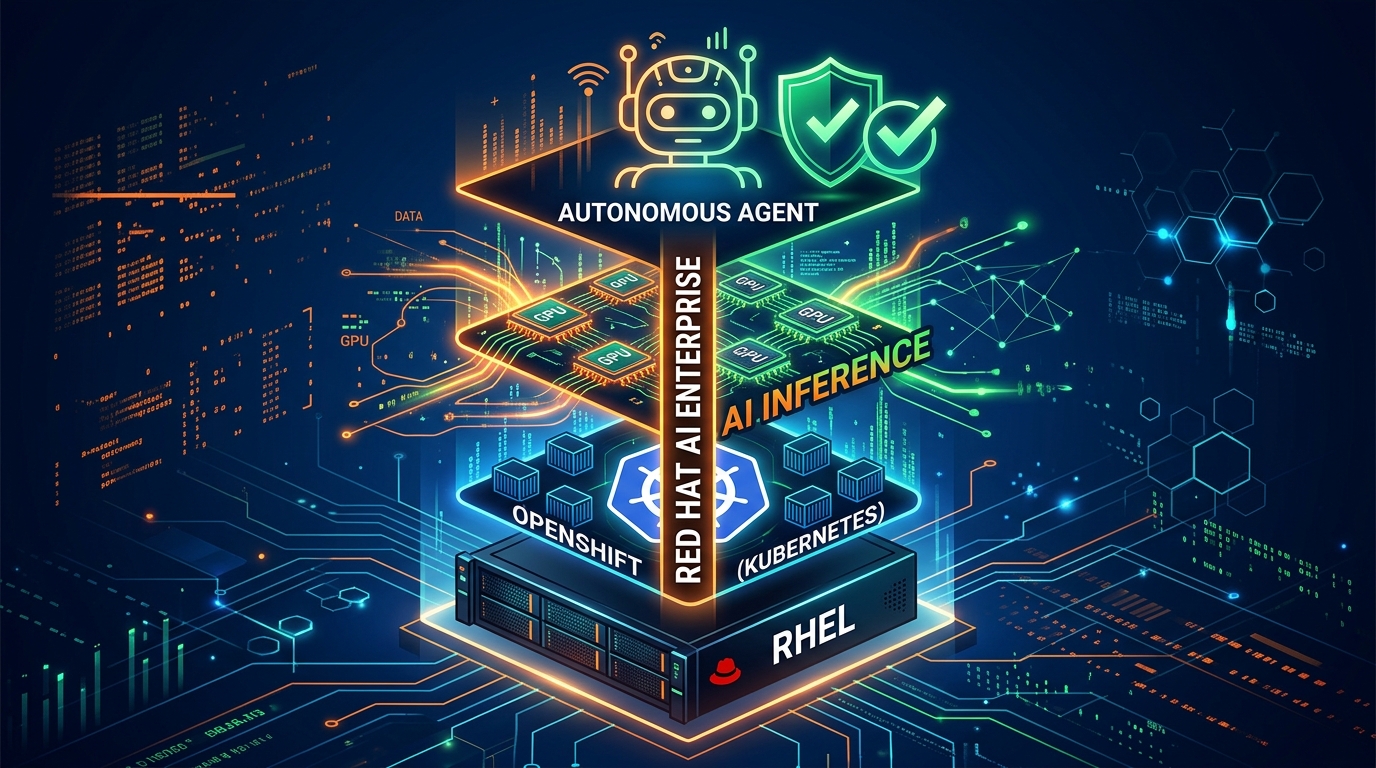
At the 2026 Red Hat Summit, the company unveiled its most ambitious strategy in a decade: to embed AI agents directly into the core of Red Hat Enterprise Linux (RHEL) and OpenShift. The vision is a complete “metal‑to‑agent” stack — a unified platform that runs from physical hardware and the Linux kernel up to autonomous agents that interact with applications, cloud services, and enterprise data.
This is not a science experiment. Red Hat has already released production‑ready tools: Red Hat AI Enterprise (February 2026), Red Hat AI 3.4 with enterprise‑grade AgentOps (May 2026), and Ansible Lightspeed generative AI assistants for IT automation. Together, they signal a structural shift in enterprise IT: AI is no longer a separate project or a niche capability. It is becoming part of the infrastructure itself.
This article explains why Red Hat is making this bet, what the “metal‑to‑agent” stack actually does, and what it means for IT teams, developers, and the future of enterprise computing.
Quick Summary – What IT Leaders Need to Know
| Question | Answer |
|---|---|
| What is Red Hat AI Enterprise? | An integrated platform for deploying and managing AI models, agents, and applications across hybrid cloud, built on RHEL and OpenShift. |
| What is AgentOps? | A set of tools (tracing, observability, identity management) to govern AI agents from development through production. |
| What is Ansible Lightspeed? | Generative AI assistants that help IT teams write automation code and manage infrastructure using natural language. |
| How does security work? | Through sandboxed containers, NVIDIA Confidential Computing, and cryptographic identity (SPIFFE/SPIRE) to prevent rogue agents. |
| Why should IT care? | AI agents are becoming first‑class workloads. Red Hat is building the standard for running them at scale, securely and governably. |
| When can I use it? | Red Hat AI Enterprise is generally available. Red Hat AI 3.4 was announced May 15, 2026, with general availability in the coming weeks. |
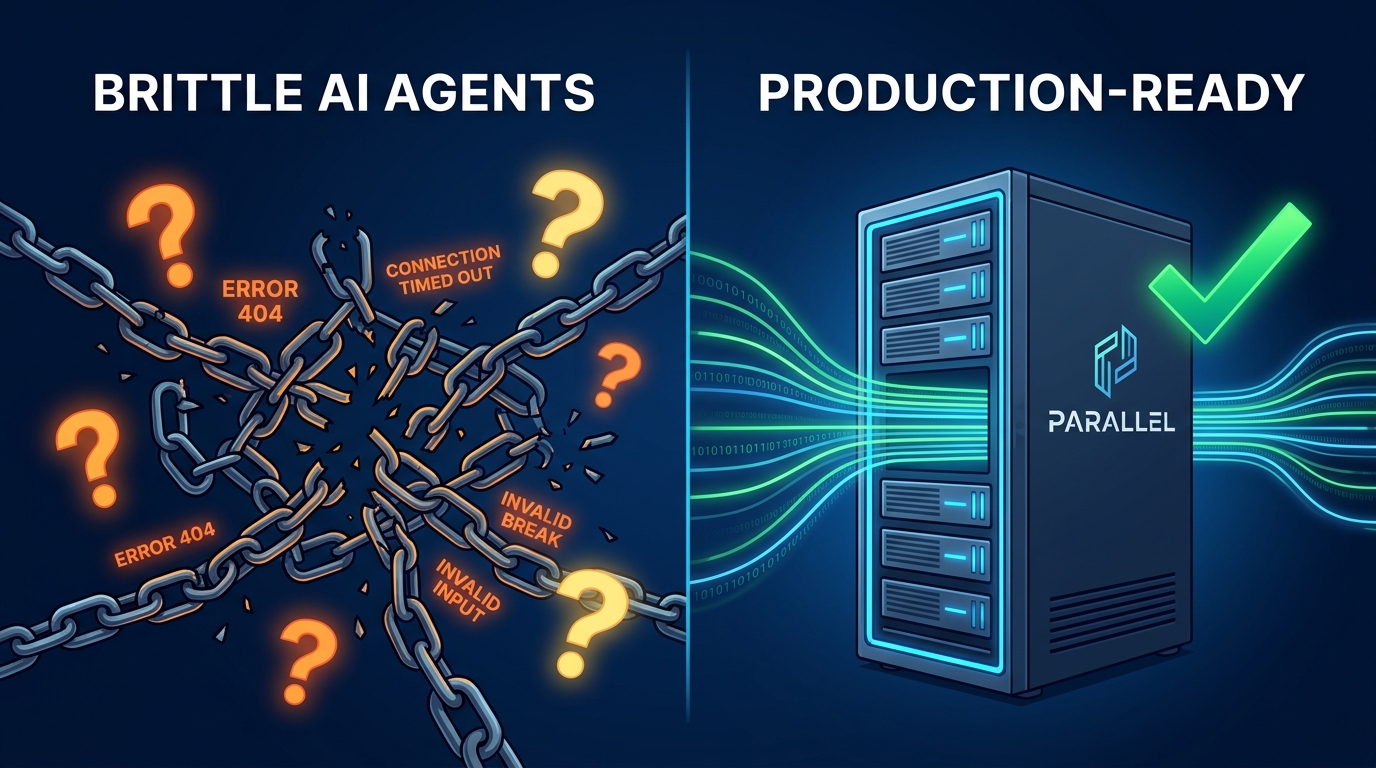
The Production Gap – Why Most AI Agents Never Leave the Lab
Before we dive into Red Hat’s solution, we must understand the problem. Today, most organizations are stuck in the “pilot phase” of AI. A data scientist builds a promising chatbot or agent on a laptop. It works beautifully — in isolation. But when the team tries to move it to production, they hit a wall.
- Security: How do you ensure the agent cannot read files it should not access or make unauthorized API calls?
- Governance: Who approved this model? Who is using it? What data is being sent to external providers?
- Observability: When the agent fails (and it will), how do you trace its reasoning steps to debug the issue?
- Scalability: How do you serve thousands of concurrent agent requests without melting your GPU cluster?
These are not theoretical concerns. They are the reason that, according to industry surveys, over 80% of enterprise AI projects never reach production.
Red Hat’s insight is that the missing piece is infrastructure. Just as Kubernetes became the standard for deploying containerized applications, the industry needs a standard for deploying and governing autonomous agents. Red Hat intends to build that standard — on top of its existing strengths in Linux and OpenShift.
The Metal‑to‑Agent Stack – Red Hat AI Enterprise
In February 2026, Red Hat announced Red Hat AI Enterprise, an integrated platform that brings together several previously separate products into a unified whole. The goal is to provide a single, consistent way to deploy and manage AI models, agents, and applications across the hybrid cloud.
The Components
| Component | Purpose |
|---|---|
| Red Hat AI Inference Server | High‑performance model serving using vLLM and llm‑d distributed inference. |
| Red Hat OpenShift AI | Kubernetes‑based MLOps platform for model training, tuning, and lifecycle management. |
| Red Hat Enterprise Linux AI | The underlying operating system with GPU acceleration, drivers, and optimizations. |
Together, they form a “metal‑to‑agent” stack — linking physical infrastructure (servers, GPUs, storage) to agent deployment and management. The metaphor is deliberate: just as metal (servers) becomes virtualized into containers and orchestrated by Kubernetes, now agents become the top layer of that stack.
Key Capabilities
- High‑performance inference – Using vLLM and llm‑d, the platform can serve large language models with low latency and high throughput, optimized for hybrid hardware (NVIDIA GPUs, AMD Instinct, Intel Gaudi).
- Model tuning and customization – Built‑in tools for fine‑tuning models on enterprise data without leaving the platform.
- Agent deployment – Lifecycle management for agents, including versioning, rollback, and canary deployments.
- Hybrid cloud – The same stack runs on‑premise, in the public cloud (AWS, Azure, GCP), or at the edge.
For organizations heavily invested in NVIDIA, Red Hat co‑engineered the Red Hat AI Factory with NVIDIA, combining the Red Hat stack with NVIDIA AI Enterprise and NVIDIA NeMo Guardrails for production‑grade safety.
AgentOps – Managing Agents at Scale with Red Hat AI 3.4
The February release established the foundation. The May 2026 release — Red Hat AI 3.4 — added the governance and management tools that make agents enterprise‑ready. This is arguably the most important update.
Model‑as‑a‑Service (MaaS)
At the heart of AI 3.4 is a Model‑as‑a‑Service offering that provides a governed interface for developers. Instead of calling an LLM directly, developers request access through a standardized API. Administrators can:
- Track consumption by team, project, or user.
- Set rate limits and budgets.
- Enforce which models are allowed (internal vs. external).
- Require authentication via corporate identity providers.
This directly addresses the Shadow AI problem (unapproved AI tools) that we covered in a previous article. Infrastructure teams gain visibility and control without slowing down innovation.
AgentOps: Tracing, Observability, and Identity
The most significant addition is a suite of AgentOps tools. If DevOps is about managing applications, AgentOps is about managing autonomous agents — which are stateful, unpredictable, and potentially dangerous.
| Feature | What It Does |
|---|---|
| Tracing | Follows every step an agent takes: reasoning, tool calls, API requests, and responses. Useful for debugging and audit. |
| Observability | Monitors agent performance, latency, token usage, and error rates in real time. |
| Identity management | Uses cryptographic identity (SPIFFE/SPIRE) to assign short‑lived, verifiable credentials to each agent. No more static API keys. |
| Lifecycle management | Deploy, update, and retire agents in a controlled manner, with rollback capabilities. |
The platform integrates MLflow for experiment tracking, giving data scientists and operations teams a shared view of agent execution.
Prompt Management and Evaluation
Prompts are the “code” of agentic AI. Red Hat AI 3.4 introduces a central prompt registry where teams can store, version, and reuse prompts as data assets. An evaluation hub assesses prompt quality, safety, and bias using tools from Chatterbox Labs and the Garak project, screening for:
- Jailbreak attempts
- Prompt injection
- Bias and toxicity
- Hallucination risk
For run‑time safety, NVIDIA NeMo Guardrails are integrated, allowing enterprises to define allowed and disallowed agent behaviors.
Inference Improvements
On the performance side, AI 3.4 adds request prioritization. Interactive, latency‑sensitive agent requests can be prioritized over background batch processing, sharing the same inference endpoint. Speculative decoding (now generally available) speeds up response times by 2–3x while reducing cost per interaction.
Support has also been extended beyond OpenShift to other Kubernetes services, including CoreWeave and Azure, ensuring a consistent inference environment across on‑premise and cloud.
Ansible Lightspeed – AI for the Automation Team
Not all AI agents are customer‑facing. Red Hat is also deploying AI to help its own users manage infrastructure — and in doing so, demonstrating the power of agentic automation.
Intelligent Assistant for Platform Administrators
Embedded directly in the Ansible Automation Platform dashboard, the Ansible Lightspeed intelligent assistant functions like having an Ansible expert on demand. Administrators can ask operational questions such as:
- “What is an execution environment?”
- “How do I upgrade to the latest version of Ansible Automation Platform?”
- “Explain the ‘ERROR! couldn’t resolve module/action’ message.”
Using a retrieval‑augmented generation (RAG) architecture connected to Red Hat’s documentation, the assistant returns cited references and helps minimize context‑switching. Future versions will transform it into a real‑time operational advisor that can diagnose why a job failed or list live inventory status.
Coding Assistant for Automation Developers
For automation engineers, Ansible Lightspeed with IBM watsonx Code Assistant can generate single tasks, multiple tasks, or entire Ansible Playbooks from natural language prompts.
Examples:
- “Write an Ansible Playbook to provision a VM on AWS.”
- “Deploy a LAMP stack on a RHEL server.”
- “Show me an Ansible Playbook that will install RHEL AI.”
Powered by IBM Granite code models trained on Ansible‑specific datasets, this tool dramatically lowers the barrier to entry for automation development. A junior admin can now produce production‑ready playbooks without memorizing Ansible’s extensive module library.
Developer Lightspeed
Beyond Ansible, Red Hat also announced Developer Lightspeed — an AI‑powered assistant embedded into its Developer Hub and Migration Toolkit for Applications. It helps developers modernize legacy applications, refactor code, and generate unit tests, accelerating the move to cloud‑native architectures.
The Security Stack – Red Hat AI Factory with NVIDIA
Autonomous agents introduce new security risks. An agent with the ability to read files, call APIs, and execute code could, if compromised, cause immense damage. Traditional perimeter security is insufficient.
The Red Hat AI Factory with NVIDIA addresses this challenge through a multi‑layer security architecture.
OpenShell Sandbox
At the core is OpenShell, a sandboxed runtime that gives enterprises unified control over what an agent can execute, which resources it can access, and how its inference requests are routed. Every action is logged and can be audited.
Hardware‑Level Isolation
The security architecture extends the trust boundary to the hardware layer, combining:
- NVIDIA Confidential Computing – protects data in use by encrypting GPU memory.
- Red Hat OpenShift sandboxed containers – isolates agent workloads from each other and from the host.
- SELinux, FIPS, and NVIDIA DOCA – enforce least‑privilege access and cryptographic compliance.
Zero‑Trust for Agents
Agents are assigned cryptographic identities using the SPIFFE/SPIRE framework. Instead of long‑lived API keys, agents receive short‑lived, automatically rotating tokens. Each action is tied to a specific agent identity, enabling fine‑grained access control and comprehensive audit trails.
These capabilities help enterprises respond to emerging governance requirements such as the EU AI Act, which mandates transparency and risk management for high‑risk AI systems.
Why This Matters for IT – Strategic Implications
Red Hat’s “metal‑to‑agent” strategy is not just a product announcement. It signals a structural shift in enterprise IT.
AI Becomes Part of the Infrastructure
For the past two years, AI has been treated as a special project — separate from the rest of IT. That is changing. Red Hat is embedding AI directly into the operating system and orchestration layer. Agents become first‑class citizens, with their own:
- RBAC permissions – who can deploy agents, which data they can access.
- Verifiable identities – every agent is cryptographically signed.
- Lifecycle management – agents are deployed, updated, and retired like any other workload.
AgentOps Is the New DevOps
Just as Kubernetes standardized application deployment, Red Hat is creating an open standard for agent deployment and governance. The AgentOps tools (tracing, observability, identity) provide the same level of control for agents that DevOps tools provide for containers. This moves the industry beyond the current fragmentation of agent frameworks (LangChain, CrewAI, AutoGen, etc.).
Controlled Access Prevents Shadow AI
The Model‑as‑a‑Service approach gives infrastructure teams visibility into which models are used, by whom, and for what purpose. This reduces the risk of employees using unapproved AI tools (Shadow AI) and ensures compliance with data protection regulations.
Enterprise‑Grade Agents Require Enterprise‑Grade Security
Running agents in production requires more than a Python script. It requires cryptographic identity, least‑privilege access, hardware‑level isolation, and comprehensive audit trails. Red Hat’s partnership with NVIDIA addresses all of these concerns, making it possible for regulated industries (finance, healthcare, government) to adopt agentic AI.
Frequently Asked Questions (FAQ)
Q1: Is Red Hat AI Enterprise a replacement for OpenShift?
A: No. Red Hat AI Enterprise builds on top of OpenShift and RHEL. It adds AI‑specific capabilities (inference, model tuning, agent management) but the underlying Kubernetes platform remains OpenShift.
Q2: Can I run agents built with LangChain or CrewAI on this platform?
A: Yes. Red Hat supports a “Bring Your Own Agent” (BYOA) strategy. You can use the frameworks you prefer while inheriting centralized lifecycle management, security, and observability from the platform.
Q3: How is this different from just calling an LLM API from a Kubernetes pod?
A: A simple API call is stateless and lacks governance. Red Hat’s platform provides AgentOps (tracing, identity, access control), model governance (approval, rate limiting), and hardware‑level security (Confidential Computing) — capabilities that a raw API does not offer.
Q4: What is the difference between Ansible Lightspeed for coding and the intelligent assistant?
A: The coding assistant is integrated into VS Code and helps developers write Ansible Playbooks. The intelligent assistant is embedded in the Ansible Automation Platform dashboard and helps platform administrators configure, troubleshoot, and operate their automation environment.
Q5: Is this available for on‑premise deployments?
A: Yes. Red Hat AI Enterprise runs on‑premise, in the public cloud, or at the edge. The same stack works across environments.
Q6: How does this connect to your article on Shadow AI?
A: Directly. The Model‑as‑a‑Service feature gives IT teams visibility and control over which AI models employees use. This prevents the hidden, unauthorized AI usage that we described in “Shadow AI.”
Q7: What about compliance with the EU AI Act?
A: Red Hat AI Enterprise includes features designed to help with compliance: audit trails, model evaluation, bias detection, and identity‑based access control. However, customers are responsible for their own compliance.
Q8: When will Red Hat AI 3.4 be generally available?
A: It was announced on May 15, 2026, with general availability expected in the coming weeks (likely June 2026).
Conclusion – The Operating System for the Agentic Era
For decades, Red Hat has been the steward of enterprise Linux and Kubernetes. With its 2026 AI announcements, it is extending that stewardship into the new frontier of autonomous agents.
The company is not simply adding AI as a feature. It is re‑architecting its entire platform so that agents become first‑class workloads — running securely on bare metal, orchestrated by Kubernetes, managed with enterprise‑grade governance, and accessible through simple, natural interfaces.
The “metal‑to‑agent” stack is not a marketing slogan. It is a technical reality, available today to enterprises that want to move beyond AI pilots and into production.
The era of agentic computing has begun. And Red Hat is building the operating system that will run it.
References & Further Reading
- Red Hat Official Blog – “Announcing Red Hat AI Enterprise” (Feb 2026)
- Red Hat Summit 2026 Keynote – “Metal to Agents” (May 2026)
- Red Hat Newsroom – “Red Hat AI 3.4 delivers AgentOps for production AI” (May 15, 2026)
- Red Hat – “Ansible Lightspeed with IBM watsonx Code Assistant” documentation
- NVIDIA – “Red Hat AI Factory with NVIDIA” announcement (May 2026)
- The Register – “Red Hat makes agents first-class citizens on OpenShift” (May 2026)
- TechCrunch – “Red Hat’s big bet on enterprise AI agents” (May 2026)







Leave a Reply